 Orcas Island Siding
 Energy-Efficient Windows Built for San Juan Island's Climate
San Juan Island homes lose heat and take on moisture through their windows more than almost any other part of the building envelope, and the marine climate out here makes that worse than it would be somewhere inland. Salt-laden air moving off the water, driving rain that comes in sideways during winter storms, and a moss season that can run most of the year on shaded walls all put sustained pressure on window seals, frames, and hardware. A window that's merely "double-pane" isn't automatically doing its job in this environment — how it's built, what it's made of, and how it's installed all matter as much as the glass itself.
We work throughout San Juan County, including regular jobs on San Juan Island, and energy-efficient window replacement is one of the most common calls we get from homeowners who notice drafts, fogged glass, or a heating bill that keeps climbing even though nothing else about the house has changed. This page covers what actually makes a window energy-efficient in this climate, what a correct installation involves, and why it matters that the crew doing the work already knows how San Juan Island's exposure differs from a typical mainland install.
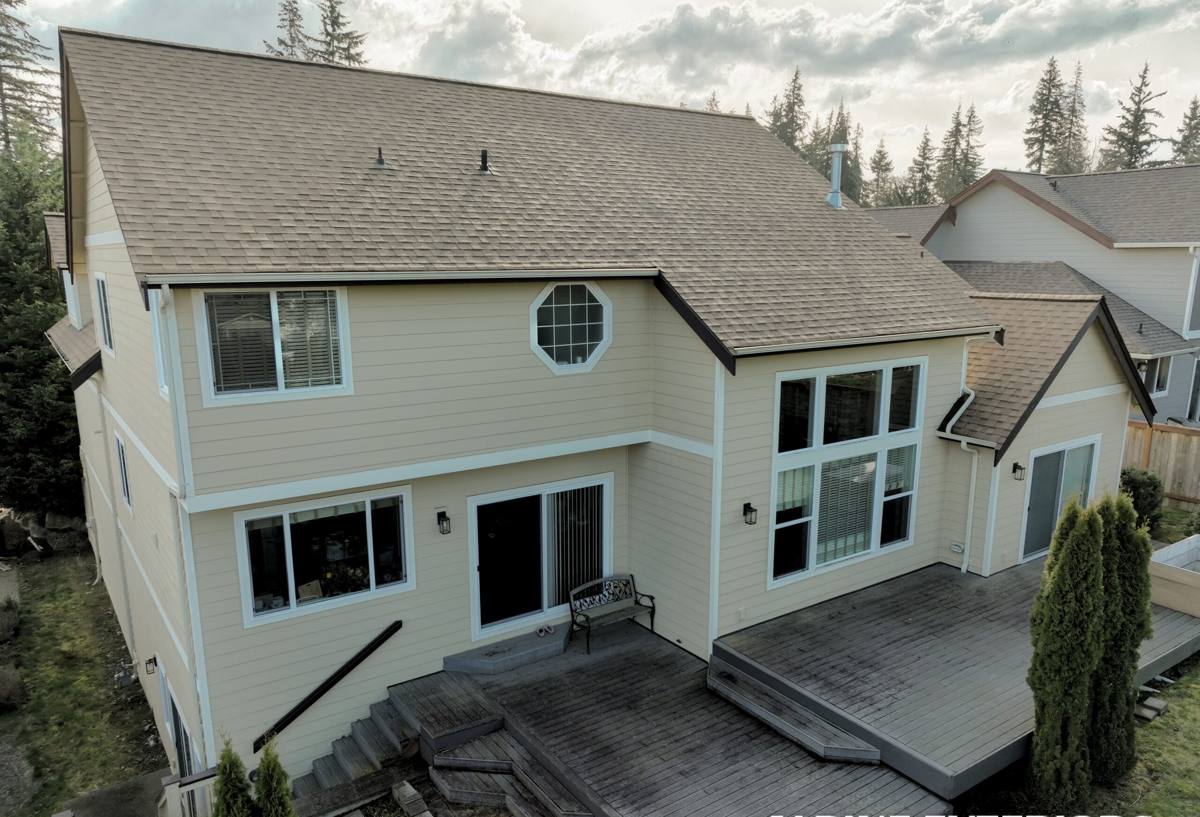
What This Climate Does to Windows Over Time
Salt Air and Hardware Corrosion
Even on properties set back from the shoreline, San Juan Island homes sit inside a marine air environment that accelerates corrosion on lower-grade window hardware, fasteners, and frame components. Locks, hinges, and balance mechanisms that would hold up fine in a dry inland climate tend to stiffen, pit, or fail noticeably earlier here. Once hardware starts binding, a window doesn't close and seal fully, and a window that doesn't seal fully isn't insulating the way it's rated to.
Driving Rain and Seal Failure
Winter storms coming off the water don't fall straight down. Wind pushes rain sideways into window openings, working at seams, weep holes, and the joint between the frame and the surrounding wall. Water that finds a way behind the trim doesn't just cause rot over time — it also degrades the insulating seal around the frame, which is part of what actually keeps conditioned air inside the house.
A Long Moss Season on Shaded Elevations
Mild temperatures and near-constant moisture from fall through spring give moss and mildew a long growing season across San Juan County, and window sills, trim, and the wood framing around older units are common places it takes hold first. North-facing walls and windows tucked under eaves or tree canopy stay damp longest, and that's exactly where we find the most advanced sill and trim damage on repair calls.
Temperature Swings and Condensation
The gap between a heated interior and a cold, wet exterior puts real condensation pressure on glass and frames during the colder months. Fogging between panes, water pooling on interior sills, or a persistent damp feel near a window usually means a seal has already failed — not just a cosmetic issue, but a sign the unit has stopped performing as an energy-efficient window at all.
Signs a San Juan Island Home Needs Window Attention
- Fogging or visible moisture trapped between the panes of a double-pane window
- Noticeable drafts or cold spots near frames even when the window is fully closed and locked
- Sills or trim that feel soft, look discolored, or show visible rot or moss growth
- Windows that stick, won't stay open, or are harder to lock than they used to be
- A heating bill that keeps rising without a clear reason elsewhere in the house
- Visible daylight or gaps where the frame meets the siding or trim
What Actually Makes a Window Energy-Efficient
"Energy-efficient" gets used loosely in window marketing, but it comes down to a few measurable factors: how well the frame and glazing resist heat transfer (U-factor), how much solar heat the glass lets through (solar heat gain coefficient), and how well the whole assembly resists air infiltration. In a climate like San Juan Island's, where the bigger annual cost is usually heat loss rather than cooling load, U-factor and air-tightness tend to matter more than solar control — though south- and west-facing rooms with a lot of glass still benefit from a glazing package that manages solar heat gain too.
| Factor | What It Measures | Why It Matters Here |
|---|---|---|
| U-factor | Rate of heat transfer through the window | Lower U-factor means less heat escapes during long, cool, wet stretches |
| Solar heat gain coefficient (SHGC) | How much solar heat passes through the glass | Matters most on sun-exposed south and west walls; less critical on shaded elevations |
| Air leakage rating | How much air moves through the assembly under pressure | Wind-driven storms make a tight seal worth more here than in calmer inland areas |
| Frame material | What the sash and frame are built from | Determines resistance to rot, corrosion, and long-term seal performance in salt air |
| Glazing package | Number of panes, gas fill, and low-E coating | Double or triple-pane with low-E coating reduces both heat loss and interior condensation |
Most manufacturers publish these numbers through NFRC labeling, and an ENERGY STAR rating for our region is a reasonable baseline to look for — but the label alone doesn't tell you whether the specific unit was installed with a seal that will actually hold up to wind-driven rain and salt air over the next twenty years. That's an installation question, not a product question, and it's the one homeowners ask us about least even though it matters just as much.
Frame Material Trade-Offs for a Marine Climate
We install vinyl and fiberglass window systems for most San Juan Island projects. Both resist rot in a way uncladded wood frames don't, which matters given how much moisture this region carries through the year. Vinyl is generally the more affordable option and performs well in mild, wet climates. Fiberglass tends to be more dimensionally stable through temperature swings and can be painted later if a homeowner wants to change the exterior color. Wood and wood-clad frames can look excellent, but they carry a real maintenance commitment — finish upkeep on any exposed wood component in this salt-air, high-moisture environment — that we walk through honestly with any homeowner considering them.
What a Correct Installation Actually Involves
A high-performance window installed with poor flashing will underperform and eventually leak in this climate, while a solid mid-grade window installed correctly will usually outlast it. Correct installation means the flashing laps properly with the weather-resistive barrier and siding around the opening, water is directed out and away from the rough opening rather than trapped behind it, and every seam is sealed with materials rated for sustained marine moisture exposure — not caulk used as a substitute for flashing, which is one of the most common failure points we find on older San Juan Island homes when we open up a wall around a leaking window.
Insulation around the frame matters just as much as the window unit itself. A gap left unfilled or improperly insulated between the frame and the rough opening creates a direct path for both air infiltration and moisture, which undercuts the energy performance of even a well-rated window. This is standard practice on every window we install, not an upgrade homeowners have to ask for separately.
Replacement vs. Repair: How We Make the Call
Not every window on a San Juan Island property needs full replacement. A unit with a failed seal but a sound frame and working hardware can sometimes be reglazed or resealed. A unit with rotted framing, corroded hardware, or a persistent draft that sealing doesn't fix is usually a better candidate for replacement, since the labor spent patching it repeatedly ends up costing more than doing the job once, correctly.
| Condition | Repair Usually Makes Sense | Replacement Usually Makes Sense |
|---|---|---|
| Fogged glass, sound frame and hardware | Yes — reglaze or seal replacement | Only if the frame is also compromised |
| Corroded locks or balance hardware | Yes — hardware replacement | Not on its own |
| Soft, rotted, or moss-damaged framing | Rarely a lasting fix | Yes |
| Persistent draft despite sealing | Sometimes, if flashing is the actual cause | Yes, if the unit itself is the source |
| Older single-pane or early double-pane units | Possible short-term patch | Yes, for real energy and comfort gains |
Our Process
We start with an on-site look at the existing windows — checking frame condition, seal integrity, hardware function, and how the current flashing ties into the siding around each opening. From there we give a straightforward read on which windows are reasonable repair candidates and which make more sense to replace, along with a written scope before any work begins. We'll talk through frame material, glazing package, and realistic energy performance for your specific exposure, rather than steering every homeowner toward the same product. Flashing, insulation, and drainage detailing are handled as standard practice on every job, not offered as optional upgrades.
A quick checklist worth going through before hiring anyone for window work on San Juan Island:
- Ask specifically how they handle flashing integration with the existing siding, not just which window brand they sell
- Confirm current Washington contractor licensing and active liability insurance
- Get a written scope that separates the product warranty from the installation warranty
- Ask for a repair-or-replace recommendation on each affected window individually, not a blanket answer
- Ask about realistic lead times, since custom-sized windows for this region often take several weeks to arrive before installation can even start
Why a Crew That Already Works San Juan Island Matters
We're based on Orcas Island and work throughout San Juan County, including regular window and siding projects on San Juan Island. That matters for a few practical reasons beyond familiarity with the climate. Getting a crew, materials, and any follow-up visit onto the island means working around ferry schedules, which affects how a job gets planned and staffed — a contractor unfamiliar with island logistics can end up stretching a straightforward project out simply because they underestimated the travel and scheduling involved. It also means we've already seen how salt air, wind-driven rain, and shaded, moss-prone elevations behave on homes in this specific area, which shows up in decisions like how much lap a flashing detail needs or which hardware grade actually holds up here — decisions that determine whether a window installation lasts one wet winter or several decades.
If you're dealing with drafty, foggy, or hard-to-close windows on a San Juan Island property, or you're just weighing whether repair or replacement makes more sense, we're happy to take a look and give you a straight, no-pressure answer. Reach out below for a free estimate.