 Orcas Island Siding
 Windows on San Juan Island Face a Different Set of Problems
A window that performs fine forty miles inland can fail early here. San Juan Island sits fully exposed to the marine weather that moves through San Juan County, and that means salt-laden air, wind-driven rain that finds its way sideways under eaves, and a wet, shaded season long enough to grow moss on north-facing siding and trim. Window installation on this island isn't just about picking a style and setting it in the rough opening. It's about managing water and salt before either one gets a chance to work on the wood, metal, and seals that hold a window together.
We install windows across the San Juan Islands, and San Juan Island jobs get the same attention to flashing, sealants, and material selection as everything else we do. This page walks through what the climate actually does to windows here, what a correct installation looks like, and why it matters that the crew on your roofline already knows this island.
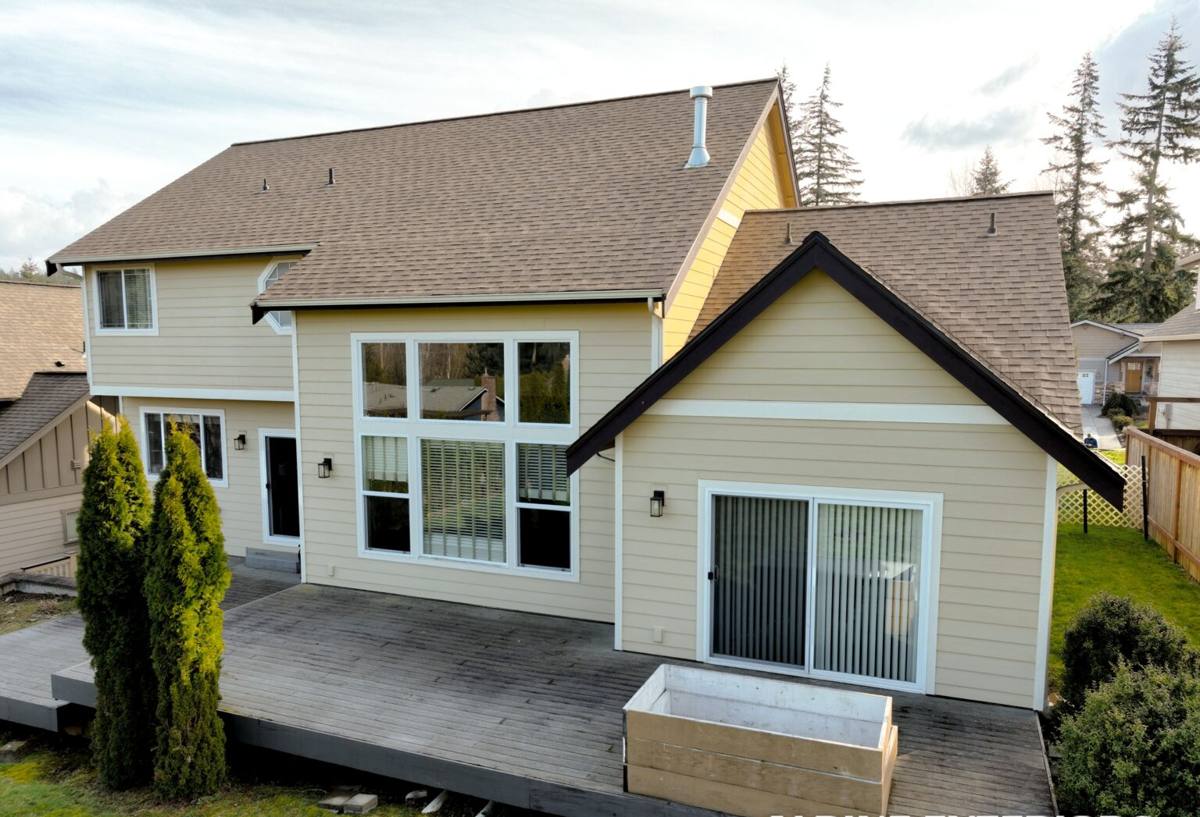
What Salt Air, Driving Rain, and Moss Season Actually Do to a Window
Salt Air and Metal Fatigue
Airborne salt settles on everything near the water, including window hardware, screen frames, and any exposed fasteners. Over years, that salt accelerates corrosion on lower-grade hinges, cranks, and cladding fasteners faster than it would inland. Aluminum-clad and vinyl frames handle this better than bare wood or unprotected steel components, but the hardware inside the window — the parts that let it open, lock, and seal — still needs to be chosen with salt exposure in mind.
Wind-Driven Rain and Flashing Failure
San Juan Island doesn't get the heaviest rainfall totals in the state, but it gets wind, and wind-driven rain behaves differently than a straight downpour. It gets pushed sideways and upward under trim, behind casing, and into any gap in the flashing that a calmer climate might tolerate. Most window leaks we find on this island aren't failed glass or bad seals — they're flashing that was installed as an afterthought instead of as a system.
Moss, Shade, and Trapped Moisture
Wooded, north-facing walls on the island stay damp for long stretches of the year, and that's exactly where moss and algae take hold on siding, trim, and window sills. Moss itself doesn't destroy a window, but it holds moisture against wood trim and sill areas that should be drying out between rain events. Combined with narrow or clogged drainage paths at the sill, that trapped moisture is a slow, steady cause of rot around window openings that homeowners often don't notice until trim is soft to the touch.
Signs a San Juan Island Home Needs New Windows
Most window failures here start small and get dismissed as normal island wear. Worth checking for:
- Soft, spongy, or discolored trim and sill wood around the window frame
- Fogging or a visible haze between panes on double-pane units — a sign the seal has failed
- Windows that are noticeably harder to open, close, or lock than they used to be
- Visible daylight or a draft at the frame edge when the window is closed
- Moss or dark staining concentrated below or beside a window, suggesting water is tracking down from a flashing gap
- Paint or finish peeling or bubbling specifically around the window opening and nowhere else on the wall
- A noticeable rise in heating cost paired with cold spots near windows in winter
Any one of these can be a minor fix. Several together, especially on the same window, usually means water has been getting past the frame for a while and it's worth having it looked at before the surrounding wall framing gets involved.
What a Correct Installation Actually Involves
The window unit itself is often the easy part. The work that determines whether a window lasts fifteen years or thirty happens in the rough opening, before and after the window goes in.
Flashing and Water Management
Every opening gets flashed in a shingle-lap sequence — sill pan first, then side flashing, then head flashing lapped over the top — so that any water that does get past the exterior cladding is directed back out, not down into the wall cavity. On a site this exposed to wind-driven rain, we treat the sill pan as non-negotiable, not optional, even on openings that look straightforward.
Air Sealing and Insulation
The gap between the window frame and the rough opening needs to be sealed and insulated correctly — not stuffed with excess fiberglass, which compresses and stops insulating, and not sealed with a rigid foam that can bow the frame and bind the sash. We use a low-expansion window-and-door foam or backer rod and sealant, matched to the gap size, so the window operates smoothly and the seal stays airtight through the temperature swings the island sees.
Frame, Sill, and Trim Prep
Any soft or water-damaged framing found during removal gets addressed before the new window goes in — installing a new window into a compromised opening just repeats the same failure on a delay. Exterior trim gets back-primed and caulked at the correct joints, not sealed everywhere, since a fully sealed perimeter with no path for incidental moisture to escape can trap water instead of shedding it.
Choosing a Window Frame Material for a Marine Climate
Frame material matters more here than it does inland, because the material has to hold up to salt air and moisture cycling, not just look good on day one.
| Frame Material | How It Handles This Climate | Maintenance |
|---|---|---|
| Vinyl | Won't rot or corrode from salt exposure; performs consistently in wet, coastal conditions | Low — occasional cleaning |
| Fiberglass | Very stable through temperature and moisture cycling, strong resistance to warping | Low — durable finish |
| Aluminum-clad wood | Good exterior protection from cladding, but any break in the cladding exposes wood to moisture | Moderate — clad must stay intact |
| Bare wood | Handsome, but the most vulnerable of the group to driving rain and prolonged damp shade | High — regular refinishing needed |
We don't push one material for every home. A shaded, north-facing wall that stays damp most of the year is a poor candidate for bare wood no matter how well it's finished, while a covered, south-facing opening can carry wood trim just fine. The right call depends on the specific wall, its exposure, and what the homeowner wants to maintain long-term — we'll walk through that honestly during the estimate rather than steering toward whatever's easiest to sell.
What Affects the Cost of Window Installation Here
Every home is different, but a few factors consistently move the price on San Juan Island jobs more than they might elsewhere.
- Number and size of windows being replaced
- Frame material chosen — vinyl and fiberglass typically cost less than clad or full-wood options
- Whether the opening size is changing or staying the same, since a like-for-like swap is simpler than a resize
- Condition of the existing framing — hidden rot found during removal adds repair time
- Site access and how materials and equipment need to get to the home, including logistics for larger orders
Whole-house replacements typically run from the low thousands into five figures depending on window count, size, and material, while single-window replacements or repairs cost considerably less. We'll give you a firm, itemized number after seeing the actual openings — not a guess over the phone.
Our Window Installation Process
The process is straightforward, but a few steps get extra attention because of where the job sits.
- On-site assessment. We look at each opening individually — sun exposure, wind exposure, existing trim condition, and any signs of past water intrusion — rather than quoting a flat per-window number sight unseen.
- Material selection and ordering. Because materials often have to be brought over, we order with enough lead time to avoid mid-job delays, and we confirm sizes and specs before anything ships.
- Removal and opening inspection. Old windows come out carefully so we can check the rough opening and framing underneath before anything new goes in.
- Repair as needed. Any rot, soft framing, or prior flashing mistakes get corrected at this stage, not covered over.
- Flashing, install, and air seal. The new window goes in plumb, level, and square, flashed and sealed per the sequence above.
- Trim, cleanup, and walkthrough. Exterior trim is finished, the site is cleaned up, and we walk the homeowner through how the new windows operate and what maintenance, if any, they'll need.
We also schedule around the weather rather than fighting it — installing during an open, dry stretch protects the framing and sealants from the moment the old window comes out to the moment the new one is fully sealed.
Why It Matters That We Already Work San Juan Island
Getting crews, tools, and materials onto San Juan Island takes planning that a contractor doing a one-off job usually hasn't built into their schedule or pricing. We already account for that logistics when we sequence a job, which means fewer surprise delays and fewer half-finished openings left exposed to weather while everyone waits on transportation.
Just as important, we know how island homes actually age. A crew that only sees a handful of coastal jobs a year treats every window opening the same way. A crew that works San Juan County regularly knows that a shaded, moss-prone wall needs different sill detailing than an open, wind-exposed one, and adjusts the flashing and material choice accordingly instead of applying a generic approach and hoping it holds.
That local presence also matters after the install. If a window needs adjustment, a seal needs attention, or a warranty question comes up, you're not waiting on a distant crew to fit you into a mainland schedule — we're already working in the area and can get back out to look at it.
Get a Free, No-Pressure Estimate
If you're dealing with drafty windows, foggy glass, soft trim, or you're simply planning ahead for a home that has to hold up to San Juan Island's salt air and wet winters, we're happy to take a look. The estimate is free, there's no pressure to book on the spot, and you'll get a straight answer about what your windows actually need — whether that's a full replacement or a smaller repair. Use the form below to get started.