 Orcas Island Siding
 Deck Replacement for Shaw Island's Marine Climate
Shaw Island sits in the heart of San Juan County, reachable only by ferry, and that isolation shapes almost every part of a deck replacement project here — from the material choices that make sense to the way a job actually gets scheduled and staffed. Like the rest of the San Juan Islands, Shaw Island homes deal with salt-laden air rolling in off the Salish Sea, driving rain that doesn't fall straight down so much as get pushed sideways by wind, and a moss season that runs long into the year thanks to mild, damp conditions. An old deck that's reached the end of its life usually shows all three of those factors at once, and often in the framing and fasteners more than in the decking boards themselves.
This page focuses specifically on deck replacement for Shaw Island properties — what tells you a deck needs replacing rather than repair, what a correct replacement involves in this climate, and why the logistics of working on an island without a bridge connection change how the job actually gets done.
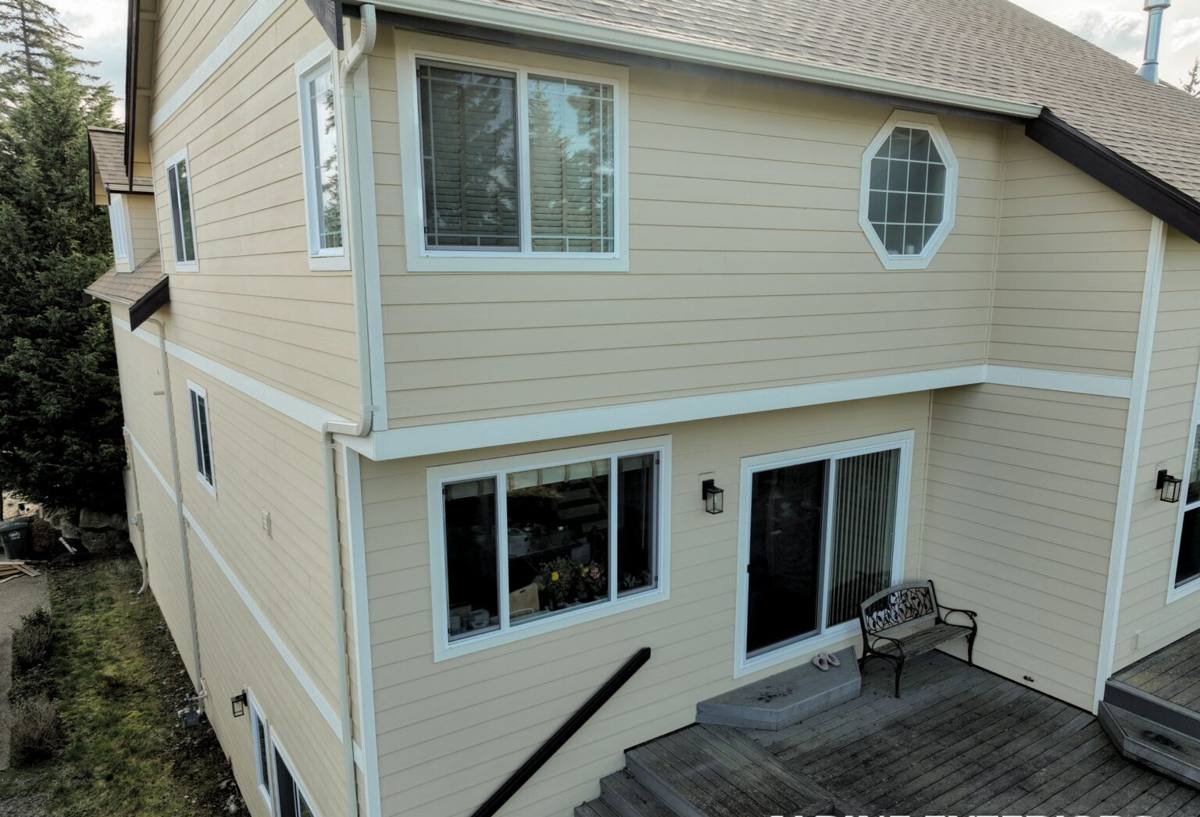
Why Decks Fail Faster in This Climate
Salt Air and Corrosion
Homes on Shaw Island sit close enough to saltwater that salt-laden air reaches most decks, not just the ones with a direct water view. Salt speeds up corrosion in exposed metal — fasteners, joist hangers, post brackets, railing hardware — and a corroding fastener loses holding strength well before it looks obviously bad from the surface. On an older deck, that's often the real reason it needs full replacement rather than a patch: the boards can look fine while the connections underneath have already failed.
Driving Rain and Wind-Driven Moisture
Storms coming off the water push rain sideways more often here than in more sheltered inland areas, driving moisture up under railings, into ledger connections, and between deck boards that were never gapped to shed water under those conditions. A deck built or repaired without accounting for wind-driven rain can look sound in dry weather and still be trapping water at the ledger board or post bases every time a real storm comes through.
A Long Moss Season
Mild temperatures and near-constant dampness give moss and mildew a long growing season on Shaw Island, and a horizontal deck surface is one of the first places it takes hold, since it holds standing water longer than a vertical wall and rarely gets a long enough dry stretch to fully clear. Moss on the surface is mostly a cosmetic problem; moss and trapped moisture working into checked or aging wood underneath is a structural one.
Repair or Full Replacement? How We Make the Call
Not every tired-looking deck needs to come out entirely, but a lot of the decks we see on older Shaw Island properties are past the point where repair makes sense. We look at a handful of specific things to make that call rather than going by age or appearance alone:
- Condition of the ledger board connection to the house — this is the single most common point of hidden rot on an older deck
- Whether support posts and footings show movement, rot, or corrosion at the base
- Joist condition, checked by probing for soft spots rather than judging by the surface alone
- How widespread fastener corrosion is versus isolated to a few spots
- Whether the deck's original framing was ever sized to meet current code, since many older San Juan County decks were built before current span and connection requirements
- Overall extent of moss and moisture damage to the decking boards themselves
A deck with isolated board damage and sound framing underneath is often a good repair candidate. A deck with ledger rot, corroded structural fasteners, or undersized framing is usually better replaced outright — patching those issues piecemeal tends to cost more over a few years than doing the job once, correctly.
Choosing Decking Material for a Shaw Island Replacement
Material choice matters more here than in a drier, more sheltered location, because the gap between a well-suited product and a poorly-suited one shows up faster under sustained salt air and moisture. The main options homeowners weigh are pressure-treated wood or cedar, capped composite, and cellular PVC.
| Material | Handling Salt Air & Moisture | Moss Resistance | Ongoing Upkeep |
|---|---|---|---|
| Cellular PVC | Excellent — no wood fiber to absorb moisture | Strong, smooth non-porous surface | Occasional washing |
| Capped composite | Strong — cap layer resists moisture and staining | Good on most product lines | Occasional washing |
| Uncapped composite | Moderate — some moisture absorption at exposed fiber | Fair; more prone to buildup over time | Periodic cleaning |
| Cedar | Moderate — natural resistance, but needs sealing | Fair when sealed and maintained | Regular oiling or sealing |
| Pressure-treated wood | Weak against sustained salt exposure over time | Poor without regular treatment | Regular sealing or staining |
None of these are wrong choices outright — the right one depends on budget, how the deck gets used, and how much upkeep a homeowner realistically wants to carry on a property that isn't always easy to get back out to on short notice.
What a Correct Replacement Involves
The visible decking surface gets most of the attention, but on Shaw Island the framing, fasteners, and drainage details underneath are what actually determine how long a replacement deck lasts. A correctly done replacement includes:
- Full removal of the old deck surface and framing down to sound structure, not new decking laid over old joists
- Inspection and correction of the ledger board connection and flashing where the deck ties into the house
- Framing sized to current code span and load requirements, not matched to whatever was there before
- Stainless steel or coastal-grade corrosion-resistant fasteners and hardware throughout
- Correct board gapping for drainage and material movement under wind-driven rain conditions
- Post and footing work brought up to current structural requirements where the old footings are undersized or deteriorated
- Grading and ventilation underneath the deck so moisture doesn't sit against the framing between storms
Skip any of these and a new deck can still look good on day one — the shortcuts usually show up a few winters later as a soft joist, a loosening post, or fastener corrosion staining its way through the boards.
Getting Materials and a Crew to Shaw Island
Shaw Island has no bridge connection — everything and everyone gets there by ferry, as part of the Washington State Ferries system serving San Juan County. That changes how a deck replacement actually gets scheduled and run. Materials have to be ordered, staged, and timed around ferry sailings rather than a same-day supply run, and there's no lumber yard or hardware store on the island itself to cover a missing part mid-job. A crew that hasn't planned for that can lose a day waiting on a forgotten fastener or a delivery that missed its sailing.
Tear-out and disposal add another layer — old decking, framing, and any rotted structural material need to be hauled back off the island rather than dropped at a nearby transfer station, which has to be planned into the schedule rather than handled as an afterthought. None of this is complicated once you've done it a few times, but a crew doing its first island job tends to underestimate how much the ferry schedule, rather than the work itself, controls the pace of the project.
How Our Process Works
We start with a site visit to assess the existing deck's condition — ledger connection, post and footing condition, joist condition, and the extent of any moss or moisture damage — and give an honest read on whether replacement or repair actually makes sense. From there we work through material options against budget and how the deck gets used, and lay out a schedule that accounts for ferry logistics on both the material delivery and crew side.
Permitting on Shaw Island follows San Juan County requirements for structural work, and we handle that as part of the job rather than leaving it for the homeowner to sort out. Once permitted and materials are staged, tear-out comes first, followed by structural repairs or replacement, then decking, railing, and any stairs or trim work. We finish with a walkthrough covering what your specific material actually needs going forward, which for most modern decking is minimal, but not nothing.
Keeping Your New Deck in Good Shape
A well-built replacement deck still needs some routine attention in this climate to reach its full lifespan:
- Rinse the deck surface periodically to clear salt residue and organic buildup before it works into the surface
- Keep gaps between boards clear of leaves and debris so water can drain and air can circulate as designed
- Check railing posts and hardware once a year for early corrosion or loosening, especially before the wet season
- Trim back overhanging branches that hold moisture against the deck or block sun and airflow across the surface
- Have any soft framing or standing water underneath addressed right away — on an island property, small problems are far easier to catch early than to let ride until the next scheduled trip out
Why It Matters That We Already Work the San Juans
A crew that mainly works the mainland can still frame and finish a deck competently, but a Shaw Island job has variables that don't come up every day elsewhere — ferry-dependent scheduling, corrosion-grade fastener requirements from sustained salt exposure, and a moss season that runs longer here than in more sheltered parts of Washington. Working the islands regularly means we're not learning those lessons on your project. We know how to stage materials and time a crew around the ferry system, which decking categories actually hold up to this specific combination of salt air, driving rain, and moss, and which structural details are worth the extra time rather than an upsell.
If your deck on Shaw Island is showing rot, corrosion, or soft spots, or you just want an honest read on whether it's a repair or a full replacement, we're glad to take a look and walk you through the options plainly. Reach out below for a free, no-pressure estimate.