 Orcas Island Siding
 Siding Built for Shaw Island, Not Just Installed There
Shaw Island sits in the heart of San Juan County, and like the rest of the San Juan Islands, it asks more of a home's exterior than most inland siding products are built to handle. Homes here deal with a marine environment day in and day out: salt-laden air off the water, wind-driven rain that finds every gap and seam, and long stretches of shade under fir and madrona canopy that keep moisture sitting on north-facing walls far longer than it should. A siding replacement on Shaw Island isn't a cosmetic upgrade. It's the single biggest factor in whether a home's exterior holds up for the next 20 to 30 years or starts showing rot, staining, and paint failure within the first five.
This page is specifically about siding replacement for Shaw Island properties — what the climate demands, what a correct installation actually involves, and why the product choice matters as much as the crew doing the work.
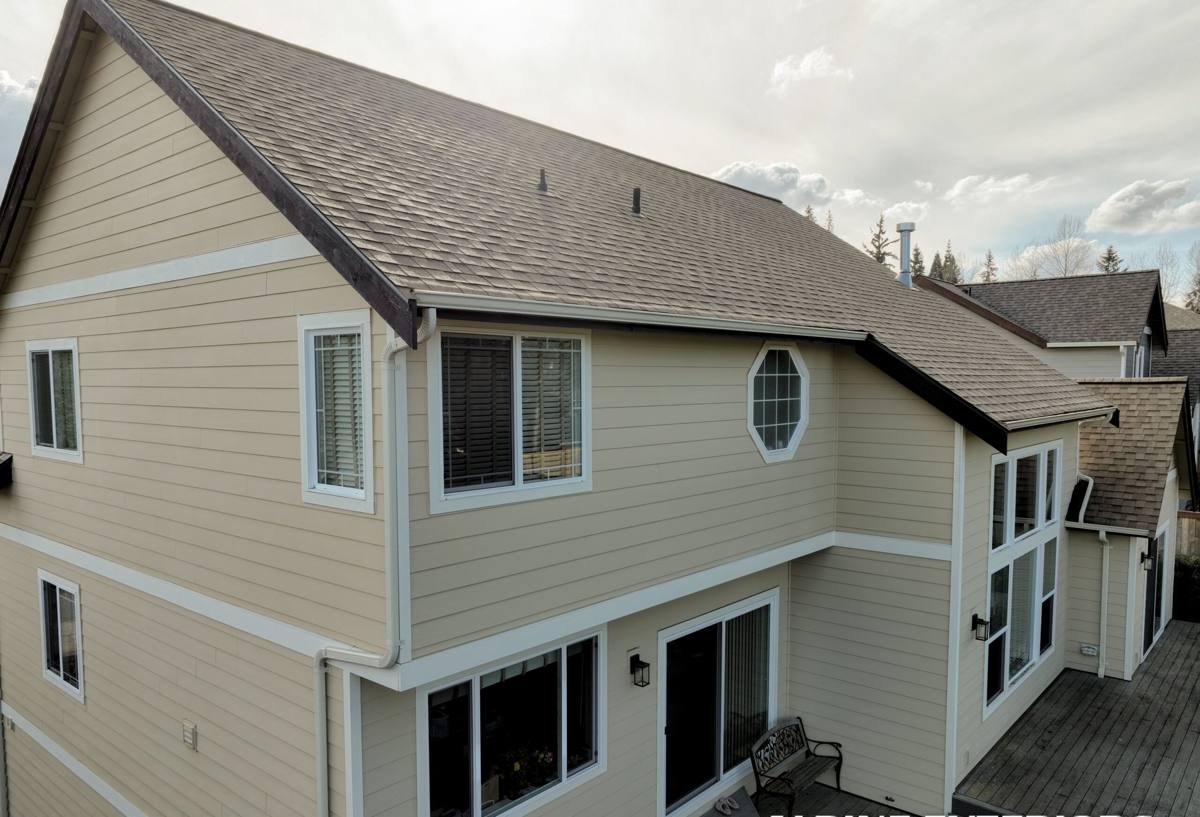
What Salt Air, Driving Rain, and Moss Season Do to Siding Over Time
Three things define the exterior climate on Shaw Island and across the surrounding waters, and each one attacks siding differently.
Salt Air
Airborne salt is corrosive to metal fasteners, flashing, and trim, and it accelerates the breakdown of paint films and coatings that aren't formulated to resist it. Over years, homes near the water show chalking, fading, and premature coating failure faster than the same product would experience even a few miles inland.
Driving Rain
Wind off the water doesn't just bring rain — it pushes it sideways, into laps, joints, and butt seams that were designed for water running straight down. Any siding product with weak seams, absorbent edges, or a installation-sensitive water management system is going to take on moisture in conditions like this, whether the product itself is rated for the region or not.
Moss Season
Tree cover common across San Juan County keeps many walls shaded and damp for months at a stretch, especially through fall and winter. That extended damp period is exactly when moss, algae, and mildew take hold on siding surfaces — and on wood-based or wood-look products, sustained moisture contact is also when rot gets a foothold, often from the back side of the board where nobody's looking.
None of this means siding fails automatically on Shaw Island. It means the product and the installation both have to be matched to these conditions on purpose, not by default.
What a Correct Siding Replacement Actually Involves
Replacing siding is not just pulling off old boards and nailing up new ones. Done right, it's a full water-management system, and skipping steps is exactly how homeowners end up with the same problems again in half the time. A correct job includes:
- Full removal of old siding and inspection of the sheathing underneath for hidden rot, soft spots, or prior water damage
- Repair or replacement of any compromised sheathing before anything new goes up
- A properly lapped weather-resistive barrier (house wrap) installed shingle-style so water sheds outward, not inward
- Correct flashing at every window, door, deck ledger, and roof-wall intersection — the points where most siding failures actually originate
- Rain screen or furring strategy where appropriate, to let walls dry out between wet periods instead of trapping moisture
- Manufacturer-specified fastener spacing, nailing patterns, and clearances (ground clearance, roof-to-wall clearance) — these numbers exist because they're where failures happen when ignored
- Factory-finished siding installed and caulked per the manufacturer's exact specifications, not general carpentry judgment
Any one of these steps done wrong can undermine an otherwise good product. This is why we treat installation as inseparable from the product itself — a great siding system installed carelessly performs like a mediocre one.
Why We Install Only James Hardie Fiber Cement
We don't install vinyl, LP SmartSide, Cemplank, Allura, primed spruce, or cedar. That's a deliberate standard, not a limitation of what we're capable of installing.
Vinyl expands and contracts significantly with temperature swings and can warp or crack in the kind of wind exposure common along the water. Wood-based composite products and cedar both rely on a protective coating or finish staying intact; once that layer is compromised by driving rain or prolonged shade, the wood substrate underneath is exposed to exactly the sustained moisture that this climate provides in abundance. Primed spruce trim faces the same problem — primer is not a finish coat, and it was never meant to be the sole defense against years of coastal weather. These aren't defects so much as trade-offs: every one of these products can perform reasonably in the right setting, but the settings that suit them are not this one.
James Hardie fiber cement is cement, sand, and cellulose fiber — it does not rot, it is not attractive to insects, and it is non-combustible. Hardie's ColorPlus finish is baked on at the factory under controlled conditions, which gives it far more resistance to fading, chipping, and moisture intrusion than field-applied paint. Hardie also engineers specific product lines (their HZ5 and HZ10 systems) for different climate zones, accounting for exactly the kind of moisture exposure and temperature range the Pacific Northwest coast sees. It's the product we're willing to put our name behind on Shaw Island homes.
Matching the Right Hardie Product to a Shaw Island Home
Not every Hardie product is used the same way. Picking the right combination depends on the home's exposure, architectural style, and how much of the exterior is siding versus trim or accent material.
| Product | Best Used For | Why It Fits Here |
|---|---|---|
| HardiePlank Lap Siding | Primary wall siding, most home styles | Traditional lapped profile sheds wind-driven rain effectively when installed with correct overlap |
| HardiePanel Vertical Siding | Modern or board-and-batten styles, accent walls | Clean vertical lines with fewer horizontal seams for water to find |
| HardieTrim Boards | Window and door trim, corner boards, fascia | Matches siding durability at the joints where most leaks originate |
| HardieSoffit Panels | Eaves and overhangs | Resists the sustained dampness common under shaded, tree-covered eaves |
Color selection matters too on the water. Darker ColorPlus finishes hold up well but can show more visible mineral buildup from salt spray over time on directly exposed elevations; lighter and mid-tone finishes are often a practical choice for water-facing walls, though this is ultimately a homeowner preference we walk through case by case, not a rule.
Our Process, Start to Finish
Every Shaw Island project follows the same sequence, because skipping steps is where problems start:
- On-site assessment — we walk the exterior, check for existing moisture damage, and assess wind and rain exposure by elevation
- Written estimate — a clear scope covering removal, sheathing repair contingencies, water management upgrades, and the specific Hardie products recommended
- Material staging and logistics — since island jobs depend on ferry schedules, materials are ordered and staged with enough lead time to avoid mid-project delays
- Tear-off and sheathing inspection — old siding comes off and any hidden damage is addressed before moving forward
- Water management installation — house wrap, flashing, and rain screen strategy installed to spec
- Hardie installation and finishing — siding, trim, and soffit installed per manufacturer nailing and clearance requirements
- Final walkthrough — we review the finished work with the homeowner before calling the job complete
What Drives the Cost of a Shaw Island Siding Replacement
We don't quote specifics without seeing the home, but the major cost factors are consistent from project to project:
| Factor | Why It Matters |
|---|---|
| Extent of hidden sheathing damage | Rot found after tear-off adds repair scope that can't be fully known until old siding is off |
| Home size and wall complexity | More corners, dormers, and trim details mean more labor and material |
| Siding profile chosen | Lap, panel, and shingle-style Hardie products vary in material and labor cost |
| Access and logistics | Ferry-dependent scheduling and site access can affect project timeline and staging costs |
| Trim and soffit scope | Full exterior packages cost more than siding-only replacements but close more moisture entry points |
Why a Crew That Already Works Shaw Island Matters
Working on an island isn't the same as working on the mainland with a truck full of extras parked around the corner. Ferry schedules dictate when crews and materials can arrive, and a miscalculated order or missed sailing can stall a project for days. A crew that already works Shaw Island and the wider San Juan Islands has that logistics figured out — material orders are timed to ferry availability, crews plan around sailing schedules instead of getting surprised by them, and the work itself accounts for site conditions specific to island homes, including limited staging space and marine exposure most inland crews rarely deal with. That experience is the difference between a project that runs on schedule and one that doesn't.
A Practical Maintenance Checklist for Shaw Island Homeowners
Once new siding is installed, a little seasonal attention keeps it performing the way it's supposed to:
- Rinse siding surfaces annually, especially shaded north- and west-facing walls where moss and algae take hold fastest
- Inspect caulking at window and door trim yearly and re-caulk any cracked or separated joints promptly
- Keep gutters clear so water isn't overflowing directly onto siding or pooling near the base of walls
- Trim back tree branches and vegetation that keep walls shaded and damp longer than necessary
- Check ground clearance periodically, especially where landscaping or mulch has built up over time
- Have flashing at deck ledgers, roof-wall intersections, and windows inspected every few years, since these remain the most common points of water entry regardless of siding material
If your Shaw Island home needs new siding, or you're not sure whether what's on it now is still doing its job, we're happy to take a look. Reach out for a free, no-pressure estimate using the form below.