 Orcas Island Siding
 Storm Damage Roof Repair Built for Crow Valley's Conditions
Crow Valley sits inland from Orcas Island's shoreline, tucked between wooded slopes that give homes here a different weather pattern than the exposed waterfront properties around the rest of San Juan County. That shelter cuts down on direct wind-driven rain compared to open coastline, but it brings its own tradeoffs: heavier tree canopy, more shade, slower drying times after a storm, and a longer moss season on north-facing roof slopes. When a winter system rolls through with sustained wind and heavy rain, Crow Valley roofs don't always show damage the same way a beachfront roof does — and that's exactly why storm damage repair here needs a contractor who understands the difference.
We repair storm-damaged roofs across Orcas Island, and Crow Valley is regular territory for us. Knowing the valley's microclimate — the shade patterns, the drainage quirks of properties tucked against tree lines, the way debris collects differently under a canopy than on an open lot — changes how we inspect, diagnose, and repair a roof after a storm.
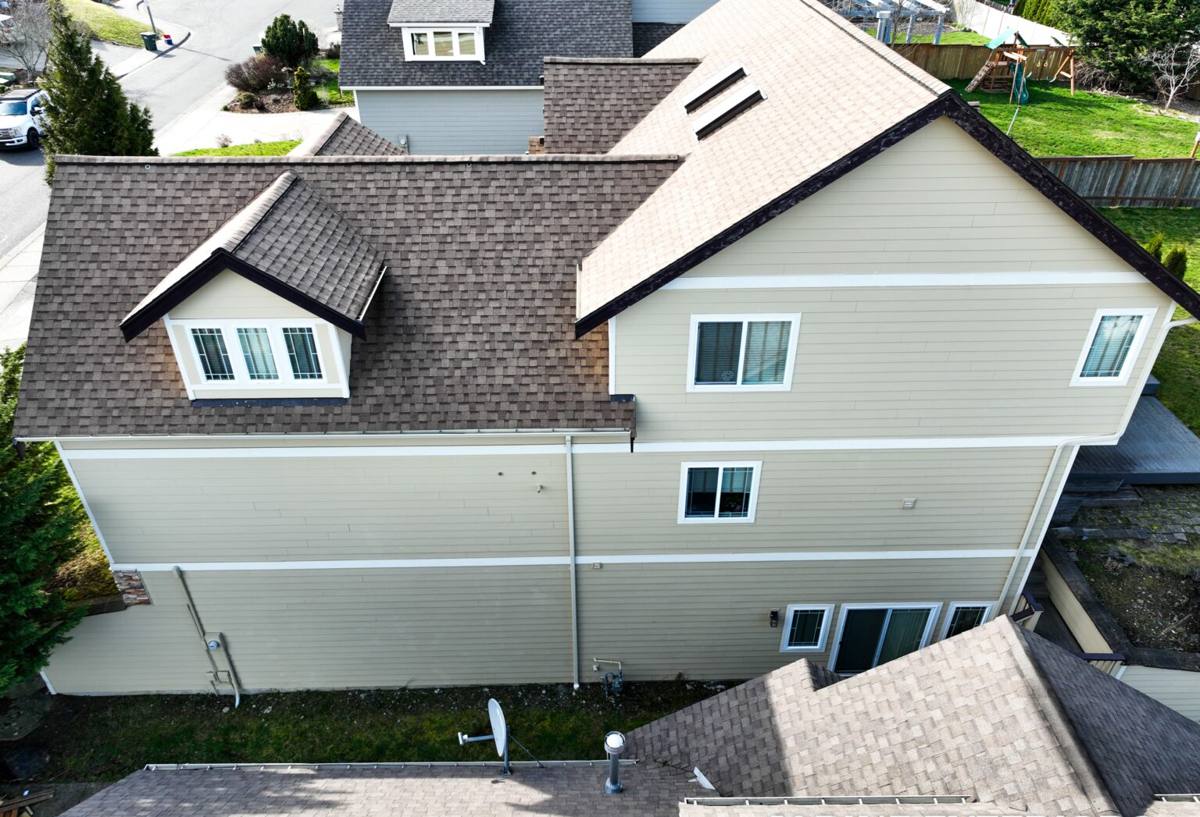
How Storms Actually Damage Roofs Here
Salt air, driving rain, and moss don't cause dramatic failures overnight. They cause slow, compounding damage that a storm event then exposes or accelerates. Understanding the mechanism matters because it changes what "repair" should actually mean.
Wind and Falling Debris
Crow Valley's tree cover reduces straight-line wind exposure, but it introduces a different risk: falling limbs and debris during high-wind events. A gust that wouldn't strip shingles on an open roof can still snap a branch that punctures underlayment or cracks a ridge cap. Wind can also lift shingles or shakes at their edges even without visible breakage, loosening the seal and creating an entry point for the next rain.
Driving Rain and Water Intrusion
Once a roofing material's seal is compromised — by wind lift, age, or impact — driving rain finds the gap. Water doesn't need a hole to get in; it needs a path, and a lifted shingle edge, a cracked pipe boot, or open flashing at a valley or chimney is enough. In a shaded valley setting, that moisture also has less sun exposure to dry it out between storms, which extends the window for rot and mold to take hold in sheathing and framing.
Moss and Organic Growth
San Juan County's damp, mild climate supports moss growth on almost any roof, but shaded, tree-lined properties like many in Crow Valley see it worse and see it longer into the year. Moss isn't just cosmetic. Its root structures work into shingle granules and seams, holding moisture against the roofing material and lifting edges — which is often the underlying reason a "storm-damaged" roof was already vulnerable before the storm hit.
What a Correct Storm Repair Actually Involves
A quick patch over visible damage is the most common shortcut we see, and it's also the most common reason a homeowner calls us back a year later with a bigger problem. A correct repair addresses both the visible damage and the conditions that let it happen.
- Full roof inspection, not just the area the homeowner flagged — wind and water damage rarely stay confined to one spot
- Interior check of attic space and ceilings for staining, moisture, or soft sheathing where a leak may have already traveled
- Assessment of flashing at valleys, chimneys, skylights, and roof-to-wall transitions, since these are the most common failure points in wind-driven rain
- Moss and debris removal from the repair area and surrounding roof plane before any patch or replacement work begins
- Matching replacement materials to existing roofing as closely as possible, both in material type and in wear, so the repair doesn't stand out or create a new weak seam
- Verification that underlayment and decking beneath the damaged area are sound before new material goes down
- A written explanation of what was found and what was done — not just an invoice
When Repair Is the Right Call vs. When It Isn't
Not every storm-damaged roof needs a full replacement, and not every roof can be responsibly patched. The honest answer depends on the roof's age, the extent of the damage, and what we find once we're actually up there.
| Situation | Typical Approach | Why |
|---|---|---|
| Isolated wind or impact damage on a roof under 10-15 years old | Targeted repair | Surrounding material is still sound; a matched patch holds long-term |
| Storm damage plus heavy moss and granule loss across the roof | Repair the storm damage, then discuss a moss remediation plan | Fixing one spot without addressing moss just delays the next leak |
| Water staining in the attic with no clear single entry point | Broader inspection before any repair estimate | Water travels; the visible stain is rarely the actual leak location |
| Roof nearing or past its expected service life with storm damage on top | Repair vs. replacement cost comparison, presented honestly | A repair on a failing roof can be money spent twice |
Our Process for Crow Valley Storm Repairs
1. Prompt, Honest Inspection
After a storm, we get eyes on the roof as soon as conditions safely allow. We walk the full roof, not just the damaged section, and we check the attic from the inside when access allows. We tell you what we actually see — including if the damage is minor and doesn't need immediate action, or if what looks minor from the ground is more serious up close.
2. Clear Scope Before Any Work Starts
You get a straightforward explanation of what's damaged, what's causing it, and what the repair involves — before we start. No vague line items, no pressure to upgrade to a full roof replacement unless the roof genuinely warrants it.
3. Repair Work Done to Last, Not Just to Pass
We match materials, properly integrate new flashing and underlayment with existing roofing, and clean the work area of moss and debris so the repair isn't undermined by the same conditions that contributed to the original damage.
4. Documentation You Can Keep
You get a record of what was inspected, what was found, and what was repaired — useful for your own records and often for insurance purposes if the damage is being claimed.
Why Storm Damage Isn't Always Obvious Right Away
One of the most common mistakes we see in the days after a storm is homeowners assuming that no visible damage from the ground means no damage at all. Lifted shingle edges, cracked pipe boots, and compromised flashing seams are often invisible from a ladder glance, let alone from the yard. In a shaded, moisture-retentive area like Crow Valley, a small entry point can sit undetected for weeks while trapped moisture works into the decking underneath — by the time a ceiling stain shows up inside, the damage has usually been developing for a while.
That's why we recommend a post-storm inspection any time your property has taken a direct hit from falling debris, sustained high wind, or an unusually heavy rain event — even if nothing looks obviously wrong. It's a short visit that can catch a small problem before it becomes a sheathing replacement or an interior repair.
Insurance and Storm Damage Claims
Many storm damage repairs in San Juan County involve a homeowner's insurance claim. We're not a public adjuster and we don't handle the claim itself, but we can provide the documentation — photos, a written damage assessment, and a repair scope — that your insurer typically needs to process a claim. Being clear and specific about what the storm caused, versus what was pre-existing wear, helps the claims process move faster and keeps the paperwork honest on both sides.
Materials and Long-Term Considerations for This Area
Whatever roofing material your Crow Valley home has, our repair standard is the same: use materials suited to Washington's wet climate, integrate them properly with what's already on the roof, and don't cut corners on flashing or underlayment just because the visible patch will look fine either way. In a shaded, moss-prone setting, we also factor in how much sun exposure a given roof slope gets, since that affects how quickly moss returns and how often a homeowner should plan on maintenance versus reactive repair.
We're straightforward about tradeoffs. If a repair approach has a maintenance cost down the road — more frequent moss treatment, for example — we say so upfront rather than let you find out later.
A Pre-Storm Checklist Worth Doing Once a Year
- Clear moss and debris buildup, especially on shaded, north-facing slopes
- Check that gutters and downspouts are clear so water isn't backing up under the roof edge
- Look for lifted or curling shingle edges from the ground with binoculars
- Trim back tree limbs that overhang the roofline or could reach it in high wind
- Note any interior ceiling staining, even faint, and have it checked before the next storm
Why Local Experience with Crow Valley Matters
Orcas Island's roofs don't all face the same conditions. A shoreline home in open wind and a Crow Valley home under tree cover need different eyes evaluating them after a storm. We work across San Juan County and know how the valley's shade, moisture retention, and debris patterns differ from the coastline — which means fewer missed problems, more accurate repair scopes, and work that actually holds up through the next moss season and the next storm.
If your Crow Valley roof has taken storm damage, or you're not sure and want a second set of eyes, we're happy to take a look. Reach out for a free, no-pressure estimate using the form below.