 Orcas Island Siding
 Roofing for West Beach's Particular Kind of Weather
West Beach sits exposed to the water on the west side of Orcas Island, and that exposure shapes everything about how a roof should be built there. Wind comes off the strait with real force, rain arrives sideways more often than straight down, and the salt carried on that wind settles on every exterior surface of a house, roof included. Add in the shade from the surrounding fir and cedar cover common to this part of San Juan County, and you get long stretches of the year where roof surfaces stay damp and start growing moss instead of drying out. None of this is unusual for the island, but West Beach gets it in a more concentrated way than more sheltered parts of Orcas.
A roof that would hold up fine in a drier, more protected part of the county can fail early out here. That's not a scare tactic, it's just what salt, wind-driven moisture, and constant shade do to roofing materials over years of exposure. Metal roofing, installed correctly, handles this combination better than most alternatives — but "installed correctly" is doing a lot of work in that sentence, and it's worth understanding why before you commit to a project.
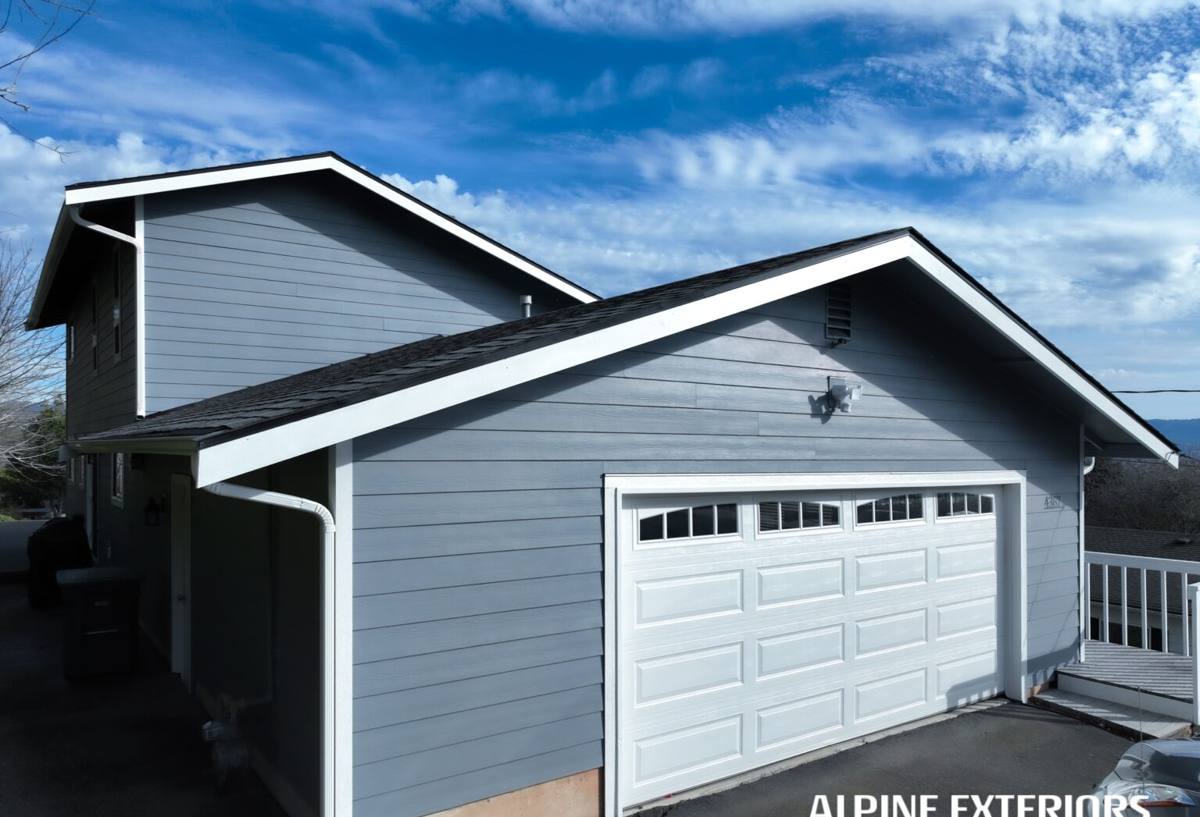
What Salt Air, Rain, and Moss Actually Do to a Roof
Salt Air
Salt-laden air accelerates corrosion on any exposed metal — fasteners, flashing, gutters, vents. On a roof, that means the small details matter as much as the main roofing material. A great panel with the wrong fastener or the wrong flashing metal will corrode from the details outward, even while the field of the roof still looks fine.
Wind-Driven Rain
Straight-down rain is easy for any roof to shed. Wind-driven rain pushes water sideways and upward under laps, around penetrations, and into any gap that a fastener or seam wasn't designed to resist. West Beach's open exposure to prevailing weather means roofs here see more of this than roofs tucked into a protected cove or a tree-sheltered lot elsewhere on the island.
Moss and Shade
Moss doesn't just look bad — it holds moisture against the roofing surface, works into laps and seams, and on some materials it can lift edges or trap debris that keeps water sitting where it shouldn't. Shaded, damp roof sections are where moss problems start, and West Beach's tree cover creates plenty of those sections.
Why Metal Roofing Fits This Environment
Metal roofing isn't automatically the right answer for every coastal property, but it has real advantages for a place like West Beach when it's specified and installed correctly:
- Steep-slope metal panels shed wind-driven rain more reliably than materials that rely on granule surfaces and overlapping tabs to stay sealed.
- A properly coated metal roof gives moss less to grip onto than a rough, granular surface, which cuts down on moss establishing itself in shaded areas.
- Correctly chosen fastener and flashing metals resist salt-air corrosion far longer than mismatched or budget-grade hardware.
- Metal roofing sheds snow load and handles wind uplift well, both relevant on an exposed West Beach lot.
That said, metal roofing is only as good as the coating system, the fastener compatibility, and the installation detailing behind it. A coastal environment is not forgiving of shortcuts, and this is where a lot of otherwise decent metal roofs run into trouble early.
Panel and Finish Considerations for a Coastal Site Like West Beach
| Factor | Why It Matters Here |
|---|---|
| Steel vs. aluminum substrate | Aluminum resists salt corrosion inherently well; steel needs a robust protective coating to perform the same in salt air. |
| Paint/coating system | Higher-grade coatings hold color and resist chalking and coastal corrosion far longer than economy finishes. |
| Fastener material | Fasteners should be matched to the panel metal to avoid galvanic corrosion, which is more aggressive in salt air. |
| Panel profile | Standing seam profiles with concealed fasteners generally resist wind-driven rain better than exposed-fastener panels. |
| Flashing and underlayment | Detailing at valleys, penetrations, and eaves matters more on an exposed site than the panel choice itself. |
What a Correct Metal Roofing Job Actually Involves
Tear-Off and Deck Inspection
Before any new roofing goes on, the existing roof comes off and the deck underneath gets inspected. On older West Beach homes, it's common to find some degree of moisture damage to the sheathing, especially in shaded, moss-prone sections. Any soft or compromised decking needs to be replaced before roofing continues — covering it over is how a new roof ends up with old problems underneath.
Underlayment
Given the amount of wind-driven rain this area sees, underlayment choice matters. A synthetic, high-temperature underlayment with proper lap and fastening is the baseline for a coastal exposure like West Beach, with additional ice-and-water membrane at eaves, valleys, and penetrations where wind-driven moisture is most likely to push its way in.
Fastening and Flashing
Every fastener and flashing piece should be matched to the panel material to prevent galvanic corrosion — a detail that's easy to skip and expensive to ignore in a salt-air environment. Flashing at chimneys, skylights, and roof-to-wall transitions needs to be layered correctly with the underlayment, not just caulked and hoped for.
Ventilation
Proper ridge and soffit ventilation keeps moisture from condensing inside the attic space, which matters year-round in a damp, shaded environment like West Beach. A well-installed metal roof with poor ventilation can still lead to moisture problems from the inside out.
How Our Process Works on a West Beach Property
Working on Orcas Island means planning around ferry schedules, material delivery timing, and site access that can be tighter than what you'd deal with on the mainland. We build that into scheduling from the start rather than discovering it mid-project. For West Beach specifically, that also means accounting for driveway and staging conditions on wooded, sometimes steep lots, and protecting siding, landscaping, and windows from tear-off debris on a site where wind can carry loose material further than it would in a sheltered yard.
We inspect the existing roof and deck, walk the property with the homeowner, and give a clear scope and price before work starts — no vague allowances that turn into surprise add-ons once the tear-off begins. Material and fastener selection is discussed up front, matched to the specific exposure of the site rather than defaulted to whatever's cheapest to stock. Once work starts, we keep the site contained and clean, and we don't leave a roof partially open overnight in weather that could turn on us — which, on this side of the island, it can.
Maintenance That Actually Extends the Life of a West Beach Roof
Metal roofing is low-maintenance compared to most materials, but "low-maintenance" isn't "no-maintenance," especially in this environment. A short annual routine catches problems while they're still cheap to fix:
- Clear debris and needle buildup from valleys and around penetrations, where moss and moisture tend to start.
- Check gutters and downspouts for salt-air corrosion and clear them of debris that traps moisture against the roof edge.
- Look for any lifted or loose flashing after major windstorms, which are common on this exposed side of the island.
- Rinse off heavy salt buildup or organic staining periodically rather than letting it sit indefinitely.
- Have any coating wear or chalking assessed before it turns into an actual leak point.
Why It's Worth Hiring a Crew That Already Works This Area
West Beach isn't a generic coastal environment — it's a specific combination of wind exposure, salt air, tree shade, and site access that a crew either has direct experience with or doesn't. A contractor who mostly works inland or in more sheltered parts of San Juan County may not default to the fastener compatibility, underlayment upgrades, or flashing detailing that this exposure actually calls for. That's not a knock on general roofing skill — it's just a different set of conditions to design around, and getting it wrong shows up years later as premature corrosion or a leak that shouldn't have happened yet.
A crew that's already worked properties in this part of Orcas Island also knows the practical side: how to plan around ferry-dependent material deliveries, how to stage a job on a wooded lot without tearing up the yard, and what this specific stretch of coastline does to a roof over time. That local knowledge shows up in the choices made before a single panel goes up.
If you're weighing a metal roof for a West Beach property, we're glad to walk the roof with you, talk through what your specific site actually needs, and give you a straightforward estimate — no pressure, no obligation. Use the form below to get started.