 Orcas Island Siding
 Roofing in West Sound: A Different Climate Than People Expect
West Sound sits along the western shoreline of Orcas Island, facing open water and exposed to weather that behaves differently than a typical inland roof has to deal with. Homes here take on salt-laden air off the water, driving rain that comes in sideways during winter storms, and heavy year-round shade from the fir and cedar canopy that covers much of San Juan County. That combination is hard on a roof in ways that don't always show up until the damage is already done.
Salt air accelerates corrosion on exposed metal — fasteners, flashing, and vent components age faster here than they would twenty miles inland. Driving rain off the Sound can push moisture up and under roofing edges on exposed gable ends and rakes if flashing details aren't built for wind-driven weather. And the tree cover that makes West Sound beautiful also means many roofs stay shaded and damp long after a mainland roof in full sun has already dried out, which is exactly the environment moss and lichen need to take hold and spread.
None of that means a roof here has to be a maintenance headache. It means the installation has to account for those conditions from the start — material choice, fastener selection, flashing details, and ventilation all matter more in this climate than they would somewhere drier and more open.
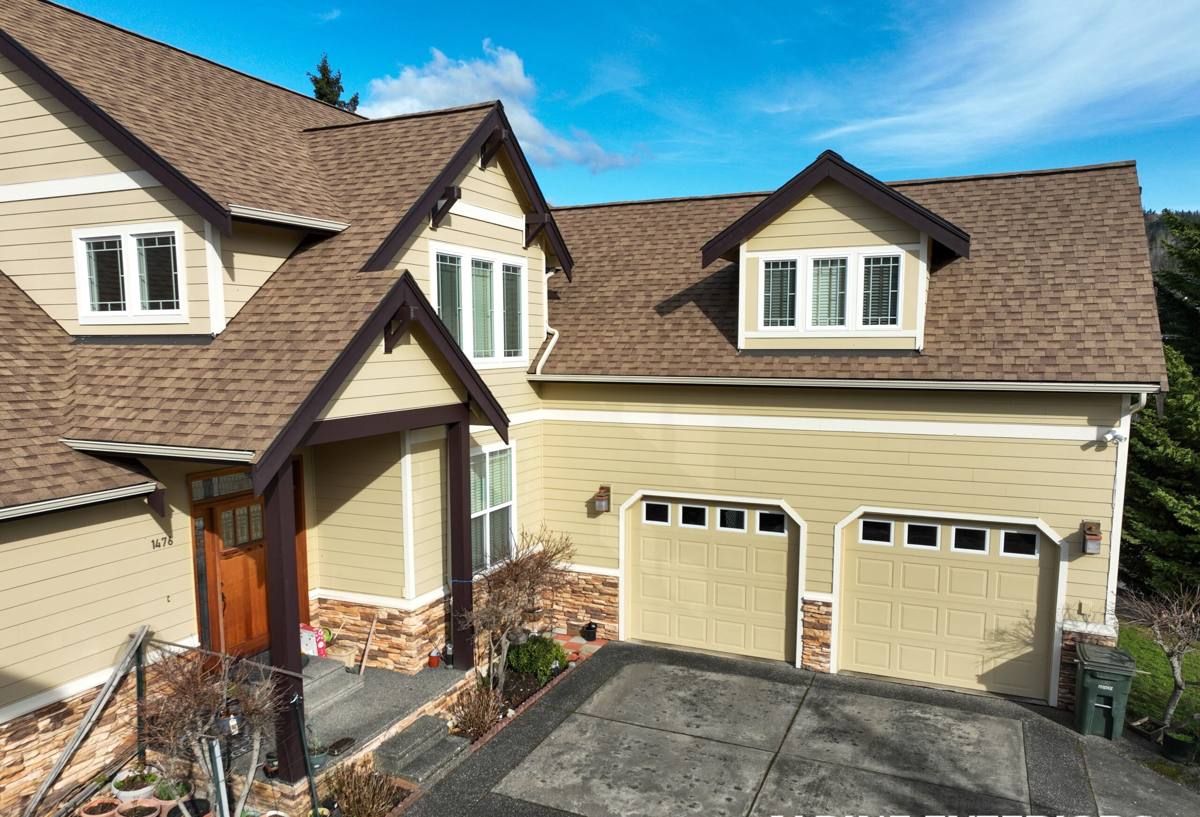
Signs Your Roof Is Telling You It's Time
Most homeowners don't wake up one day and decide they need a new roof — it's usually a slow accumulation of small signs. On Orcas Island, moss and shade make some of these signs easier to spot but also easier to write off as "just a moss problem" when the roof underneath is actually failing.
- Shingles that are curling, cupping, or losing granules in the gutters and downspouts
- Moss mats thick enough that you can't see the shingle surface underneath in shaded sections
- Soft or spongy spots when walking the roof, which usually means the decking underneath has taken on moisture
- Daylight visible through the attic roof boards, or damp insulation near the eaves
- Streaking, dark staining, or algae growth that keeps coming back within weeks of cleaning
- A roof that's already at or past 20–25 years old, regardless of how it looks from the ground
If you're seeing two or more of these, it's worth having someone look at the roof structure itself, not just the surface — on a shaded, damp lot, surface problems and structural problems can look similar from the ground.
Choosing the Right Roofing System for This Climate
There's no single "best" roofing material for every home — it depends on the roof's exposure, how much shade it sits under, and what the homeowner wants to manage over time. For a West Sound property, we weigh moss resistance and corrosion resistance more heavily than we would on a drier, more open site.
| Material | Typical Lifespan | Moss & Algae Resistance | Salt-Air Considerations | Relative Cost |
|---|---|---|---|---|
| Architectural asphalt shingle | 25–30 years | Moderate; better with algae-resistant granules, still needs periodic cleaning under shade | Requires corrosion-resistant fasteners and flashing | $ |
| Standing seam metal | 40–50+ years | High; smooth surface sheds moss more easily | Needs marine-grade coatings and fasteners to hold up long-term | $$$ |
| Synthetic composite (slate/shake look) | 30–50 years | Good; resists rot that traditional wood shake doesn't | Fastener and flashing quality still matters most | $$ |
We'll walk through these trade-offs during the estimate rather than pushing one system by default — a heavily shaded, north-facing roof section on the same house might reasonably call for a different maintenance conversation than a sun-exposed section, even though the whole roof gets installed as one system.
Why We Don't Recommend Untreated Wood Shake Here
Traditional wood shake has a real appeal, and it's still installed in plenty of places. Our standard for a shaded, damp, salt-air site like West Sound is to steer away from it, though — untreated wood holds moisture in exactly the conditions this location has in abundance, and that moisture retention shortens its practical life and increases the upkeep it demands compared with asphalt, metal, or composite options. That's a maintenance and moisture-management trade-off we're upfront about, not a claim that the product is defective.
What a Correct Installation Actually Includes
Tear-Off and Deck Inspection
A new roof starts with removing the old one down to the decking, not layering over it. That's the only way to find soft, rotted, or delaminated sheathing before it's buried under new material — and on a shaded lot where moisture lingers, deck damage is more common than homeowners expect.
Underlayment and Water Barrier
Given the amount of driving rain West Sound sees, we treat underlayment as a real second line of defense, not a formality. Self-adhered water-and-ice barrier goes down at eaves, valleys, and around every penetration — the places wind-driven rain is most likely to find a way in.
Flashing Details
Flashing at valleys, walls, chimneys, and roof-to-wall transitions is where most leaks actually originate, not in the field of the shingles. On exposed gable ends facing the water, we pay particular attention to rake and drip-edge details so wind-driven rain can't work its way underneath.
Ventilation
A roof that can't breathe traps moisture in the attic, which feeds rot from the inside and shortens the life of the roofing material from underneath. Balanced intake and exhaust ventilation matters everywhere, but it matters more on a damp, tree-covered lot where the air around the house doesn't dry out quickly on its own.
Our Process, Start to Finish
- On-site inspection and honest assessment of whether you need a full replacement or targeted repair
- Written estimate covering material options, scope of work, and timeline
- Material selection based on the roof's exposure, shade, and your maintenance preferences
- Scheduling built around weather windows and, for island logistics, ferry and delivery timing
- Tear-off, deck inspection, and repair of any damaged sheathing before new material goes down
- Underlayment, flashing, and ventilation installed to the details above
- Roofing material installed to manufacturer specifications with corrosion-resistant fasteners
- Full site cleanup, magnetic sweep for stray fasteners, and debris haul-off
- Final walkthrough and warranty paperwork before we consider the job done
Fasteners, Flashing, and the Salt-Air Factor
This is the detail that gets skipped most often on coastal and island roofing jobs, and it's the one that causes early failures. Standard electroplated fasteners and basic flashing metals corrode noticeably faster in a marine environment than they do inland — a fastener that would last decades on the mainland can start rusting and losing holding strength in a fraction of that time exposed to salt air. We use corrosion-resistant fasteners and flashing materials rated for coastal exposure as a standard practice on West Sound homes, not an upgrade option, because the alternative is a roof that looks fine for a few years and then develops rust streaks and loose fasteners right when you'd expect it to still be performing well.
Keeping Moss From Coming Back
No roofing material is permanently moss-proof under enough shade and moisture, so the goal after installation is managing the conditions that let it take hold in the first place.
- Trim back overhanging branches where practical to let more light and airflow reach the roof surface
- Keep gutters and valleys clear so water isn't sitting against the roofline
- Consider zinc or copper strips near the ridge on heavily shaded sections, which help suppress regrowth over time
- Have the roof soft-washed periodically rather than pressure-washed, which can strip granules and shorten shingle life
- Schedule a walk-through every year or two so small moss patches get addressed before they mat and hold moisture against the surface
Why a Crew That Already Works West Sound Matters
Island work has logistics that don't come up on a mainland job — material deliveries and crew schedules have to account for ferry timing, weather windows on the water can close a job site faster than they would inland, and every San Juan County permit and inspection step has its own timeline to plan around. A crew that regularly works Orcas Island builds those realities into the schedule from the start instead of discovering them mid-project, which is the difference between a roof that goes up on time and one that stalls waiting on a part or a ferry slot. It also means we've seen how roofs on this specific shoreline actually age — which exposures hold onto moss, which flashing details tend to take the worst of the driving rain, and which fastener choices hold up versus which ones show corrosion early. That's the kind of judgment that only comes from doing the work here repeatedly, not from a one-off job.
If your roof is showing its age, or you just want an honest read on how much life it has left, we're happy to take a look. The estimate is free, there's no pressure to commit to anything on the spot, and you'll get a straight answer about what your roof actually needs — use the form below to get started.